


Friday, January 29, 2021
Bridgewater scores 1,000th career point in basketball

Hume R-VIII School District is seeking applicants for the head Baseball coach position

Coaches MUST have a minimum of 60 college credit hours but a Bachelors degree is preferred.
If you are interested in this position, please contact Scott Morrison at 660-643-7411.
Warsaw Man Wins $146,000 Show Me Cash Jackpot

When asked about his initial reaction, Miller said, “I about fell out of the chair.”
Miller purchased the winning ticket at Osage Mini Mart, 915 E. Main St., in Warsaw.
Show Me Cash is drawn daily at 8:59 p.m., with jackpots that start at $50,000 and grow until won.
All Missouri Lottery offices are open – by appointment only – for claims of $600 or more. Winning tickets may also be claimed by mail.
In FY20, players in Benton County, where the ticket was sold, won more than $2.9 million in Missouri Lottery prizes. During the same time period, retailers received more than $307,000 in commissions and bonuses, and more than $1.3 million in Lottery proceeds went to education programs in the county.
Obituary - William Loyd, Jr.

Burial will follow in Vansant Road Cemetery, Clinton. The family suggests memorial contributions be made to Golden Valley Hospice or the Truman Lake Cancer Fund and can be left in care of the funeral home. Fond memories and condolences can be left online at www.vansant-millsfuneralhome.com.
William Franklin Loyd, Jr. (JR) was born March 2, 1967 in Clinton, Missouri to William and Catherine Loyd. William liked to hunt and fish, watching old westerns, he was a Union painter and owned his own business. One of his favorite things was spending time with his children and family.
William is preceded in death by his mother Catherine Loraine Loyd. He is survived by his loving wife Kerry Loyd, his daughter Allison Loyd his sons Jacob Loyd (McKenna Mendenhall) and Billy Loyd. He is also survived by his father William Loyd Sr. two sisters Lisa Gatlin and Juanita Utly and two brothers Mark Loyd and Robert Loyd. He also has nieces, nephews, and many friends that will miss him greatly.
Arrangements have been entrusted to Vansant-Mills Funeral Home, Clinton, Missouri.
William Franklin Loyd, Jr. (JR) was born March 2, 1967 in Clinton, Missouri to William and Catherine Loyd. William liked to hunt and fish, watching old westerns, he was a Union painter and owned his own business. One of his favorite things was spending time with his children and family.
William is preceded in death by his mother Catherine Loraine Loyd. He is survived by his loving wife Kerry Loyd, his daughter Allison Loyd his sons Jacob Loyd (McKenna Mendenhall) and Billy Loyd. He is also survived by his father William Loyd Sr. two sisters Lisa Gatlin and Juanita Utly and two brothers Mark Loyd and Robert Loyd. He also has nieces, nephews, and many friends that will miss him greatly.
Arrangements have been entrusted to Vansant-Mills Funeral Home, Clinton, Missouri.
City of Butler April 6th Election Candidate List

City of Butler April 6th Election Candidate List:
Ward 1:
Timothy Young – 507 N. Delaware Butler, MO 64730
Ward 2:
Mike Irick – 403 W. Ohio Butler, MO 64730
Ward 3 Two Year Term:
Linn Nitsche 905 Country Club Drive Butler, MO 64730
Tray Douty 504 W. Vine Butler, MO 64730
Ward 3 One Year Term:
Alan Mundey 715 Country Club Drive Butler, MO 64730
Ward 4:
Scott Mallatt – 601 E Dakota Butler, MO 64730
Dale Newkirk – 114 S. Havana Butler, MO 64730
Obituary - Larkin "Dub" DeWitt

Visitation will be prior to services from 10-11 a.m. Thursday at Schowengerdt Chapel. Inurnment in Byron, Arkansas. Contributions to East Lynne Baptist Church. Online condolences, www.schowenbgerdtchapel.com.
Larkin “Dub” William DeWitt, age 75 of Adrian, Missouri died Tuesday, January 19, 2021 at Adrian Manor in Adrian. He was born January 12, 1946 to Henry A. and Oma L. Sanders DeWitt in Rodney, Arkansas.
Dub is survived by his wife, Evelyn DeWitt of Adrian, Missouri; two stepdaughters, Toye Hensley and husband Scott of Cave Springs, Arkansas and Tammera Halliburton and husband Chet of Butler, Missouri; three sisters, Ethel Fann and husband David of Arizona, Judy Dillenger of Viola, Arkansas and Deloris Tate and husband Terry of Pineville, Arkansas; one brother, Frank DeWitt and wife Norma of New Boston, Missouri; eight grandchildren; four great-grandchildren; nephews; nieces; great-nephews; and great-nieces. He was preceded in death by his parents; one brother, Thurston DeWitt; four sisters, Cleatus Kruse, Henrietta Kern, Clorse Newman and Dolley Coonce; one stepdaughter, Tonya Lannette Wassam; and two grandsons, Weston Cox-Halliburton and Woody Cox-Halliburton.
Due to Covid, the Schowengerdt Funeral Chapel respectfully asks that everyone wear a mask and practice social distancing.
Larkin “Dub” William DeWitt, age 75 of Adrian, Missouri died Tuesday, January 19, 2021 at Adrian Manor in Adrian. He was born January 12, 1946 to Henry A. and Oma L. Sanders DeWitt in Rodney, Arkansas.
Dub is survived by his wife, Evelyn DeWitt of Adrian, Missouri; two stepdaughters, Toye Hensley and husband Scott of Cave Springs, Arkansas and Tammera Halliburton and husband Chet of Butler, Missouri; three sisters, Ethel Fann and husband David of Arizona, Judy Dillenger of Viola, Arkansas and Deloris Tate and husband Terry of Pineville, Arkansas; one brother, Frank DeWitt and wife Norma of New Boston, Missouri; eight grandchildren; four great-grandchildren; nephews; nieces; great-nephews; and great-nieces. He was preceded in death by his parents; one brother, Thurston DeWitt; four sisters, Cleatus Kruse, Henrietta Kern, Clorse Newman and Dolley Coonce; one stepdaughter, Tonya Lannette Wassam; and two grandsons, Weston Cox-Halliburton and Woody Cox-Halliburton.
Due to Covid, the Schowengerdt Funeral Chapel respectfully asks that everyone wear a mask and practice social distancing.
Museum Minute: The Bates Brothers
 Museum Minute
January 28, 2020
Bates County and the Bates Brothers
Bates County, Missouri
~ Established January 29, 1841~
 Many of you know that 2021 marks Missouri’s Bicentennial. 2021 is also Bates County’s 180th anniversary…
History has always been written by men and women who long to record particular happenings they deem worthy of remembrance. For the most part, there is substantial truth to the old adage, ‘history is written by the winners’ in what is chosen to record and what grows to become accepted as fact. After reading this article, I shall leave it to you to make-up your own mind about one of the little mysteries of Bates County.
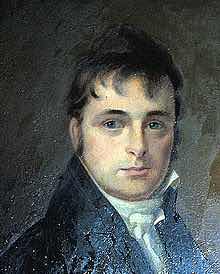
In the Museum’s grand old scrapbook there is a photograph of Frederick Bates. The inscription below it says that Bates County was named after him and that he was the second Governor of Missouri. I’ve been told that from the time I was a little girl and so had my mother. When I asked others, they all said the county was named for Governor Frederick Bates.
Frederick was born in Virginia in 1777 and was the eldest of the Bates brothers. His family was prosperous and well-connected. Frederick received an adequate education and soon began a career in politics.
In 1819, Frederick married Nancy Opie Ball, the daughter of a wealthy Virginia colonel, and they acquired 1000 acres of land in our state and named it “Thornhill.” It is the oldest governor’s home still standing in Missouri and is now a State Park located not far from St. Louis. Frederick was a slave holder and it was these men and women who built and worked in the main house, barn, distillery, smokehouse, icehouse, blacksmith shop and granary at “Thornhill.”
Then, in 1824, Frederick Bates, who was now a deeply rooted Missourian, was elected as Missouri’s second governor and he took office on November 15th of that year. Sadly, on August 4, 1825, 48 year old Frederick Bates died from what is believed to have been pneumonia. He is buried in the family cemetery on his estate.
You’re now going to be introduced to Frederick’s brother, Edward.
Edward, too, was born in Virginia in the year 1793, sixteen years after Frederick. He moved to St. Louis, Missouri in 1814 and there studied law, earning admittance to the bar, and then serving as a U.S. Attorney from 1821-1826. Notice, if you will that these years as U.S. Attorney coincides with the political rise of his elder brother, Frederick. Edward married Miss Julia Coalter from South Carolina. They had 17 children.
Now, Edward’s first foray into politics came in 1820 when he was elected as a member of the state’s constitutional convention. In 1822 he was also elected to the Missouri House of Representatives, and then served one term as a U. S.Representative. He returned to Missouri where he then served in the Missouri State Senate from 1831-35.
Edward Bates was a practicing Quaker and indeed a man of integrity. He proved as much in the 1840s trial of a young slave girl whose mother was suing for her freedom. Young Lucy Ann Berry was the daughter of Polly Crockett Berry. Polly had been born ‘a free negro’ in Illinois but as a young girl was kidnapped, taken to St. Louis, and sold. Bates was able to secure affidavits to support Polly’s claim of free birth. He then successfully argued that her daughter should be considered free as well. Lucy Berry was 14 years old when the court declared her to be free.
Following Abraham Lincoln’s inauguration as President, Edward Bates was appointed as Lincoln’s Attorney General and held the post from 1861 to 1864. Although Edward was opposed to slavery, he held very strong views, believing African-Americans were inferior to whites. He was vehemently against recruiting and training African-Americans for the Army. In 1864, Edward Bates resigned from Lincoln’s Cabinet due to policy differences with regard to full equality. He returned to St. Louis, where he died in 1869.
So, there is the story of the two Bates brothers. Both were men of political influence and personal integrity. Both would be suitable candidates for having a county named for them, but here is where we now learn of the controversy surrounding the history of our county….
The 1883 History of Bates County book states that, “Bates County was named in honor of Edward Bates by the general assembly of Missouri in 1841.”
In our, Old Settlers’ History of Bates County we are told Bates County was “so named in honor of Edward Bates, a native of Virginia and a very eminent lawyer and statesman, his last public service being rendered as Attorney General in President Lincoln’s Cabinet.”
You may believe that having a matter stated as fact in two of the books that are considered primary sources for historians should bring the matter to rest. That is certainly not the case here.
For you see, according to Legislative records in the Missouri State Archives, Bates County was indeed, absolutely, positively named for the second Governor of the State, Frederick Bates.
We know are the names of the men who wrote our Bates County history resource books and it’s quite possible that they themselves may shed some light on the mystery. The 1883 History of Bates County was written by a group of 15 men and one woman. Of the group, every one of them was a supporter of the Union during the War. Every single one.
The Old Settlers’ History of Bates County was compiled by John Newberry and Clark Wix. John Newberry was born in New York State. He moved to Bates County in 1853 and during the war he enlisted in the Union Army. Clark Wix is the onlyauthor to have been born in Bates County. His birth was in 1850 but his family soon moved to Illinois and didn’t return until 1868.
As near as I can tell, none of the authors of these two important written histories lived in Bates County at the time of its founding. And, only Mrs. Freeman (Asenath) Barrows and John Newberry resided in Bates County before the Civil War. As you have no doubt guessed, they were both strong Unionists.A large portion of the people living in Bates County during the War supported the Southern cause. We are known far and wide for the guerrilla fighting that occurred here, and of course we are ground zero of the infamous Order No. 11.
So, let me ask you…. What better time to create a new, more worthy legacy, than in the confused aftermath of a Civil Warwhen counties everywhere were busy writing their histories? The mystery and intrigue of politics in Missouri, and Bates County in particular, during the years following the war certainly causes one to wonder. Being named after Frederick, aslave-holder, even if he were a Governor of the State, surely would not promote civic pride… and it could possibly jeopardize the prosperous future envisioned for the county.
Perhaps these outstanding Unionists undertook to tell the story of their ‘new’ home in a way that would reflect well on Bates County. What better hero could a county be named for than a man who sat on President Abraham Lincoln’s Cabinet? Plus, Edward was not a slave holder, unlike his brotherFrederick. Even though Edward’s views toward Black Americans were far from inclusive, he was the best choice of the two brothers, both of whom were dead and gone.
Interestingly, W. O. Atkeson’s 1918 History of Bates County, doesn’t seem to mention for whom our county was named. Could it be that Mr. Atkeson discovered the discrepancy and decided it best to simply not address the matter? After all, some of the men who wrote those histories were still alive and were close associates of Mr. Atkeson’s.
We are left to draw our own opinions as to why local history books made such a glaring error. Did they truly believe what they printed? Or, did they knowingly print what they wanted to believe because it would be favorable to their future? Revisionist history. What goes around comes around and today, as we celebrate Bates County’s 180th anniversary, we find ourselves in the midst of our collective history being disgraced, dismantled, and rewritten before our very eyes. Future generations will be well-served if we insist on more stories of our history being told and remembered rather than removing stories to silence those that some find offensive.
For now, we celebrate the extraordinary history of Bates County and the colorful, determined, stubborn, creative, God-fearing, hard-working visionaries who helped build this wonderful place we all call home. Happy 180th Anniversary!
The Bates County Museum strives to Preserve Our History & Sustain Our Heritage!
Peggy Buhr ~ Museum Director
Subscribe to:
Comments (Atom)

